Discover 7 powerful differences between traditional vs digital marketing
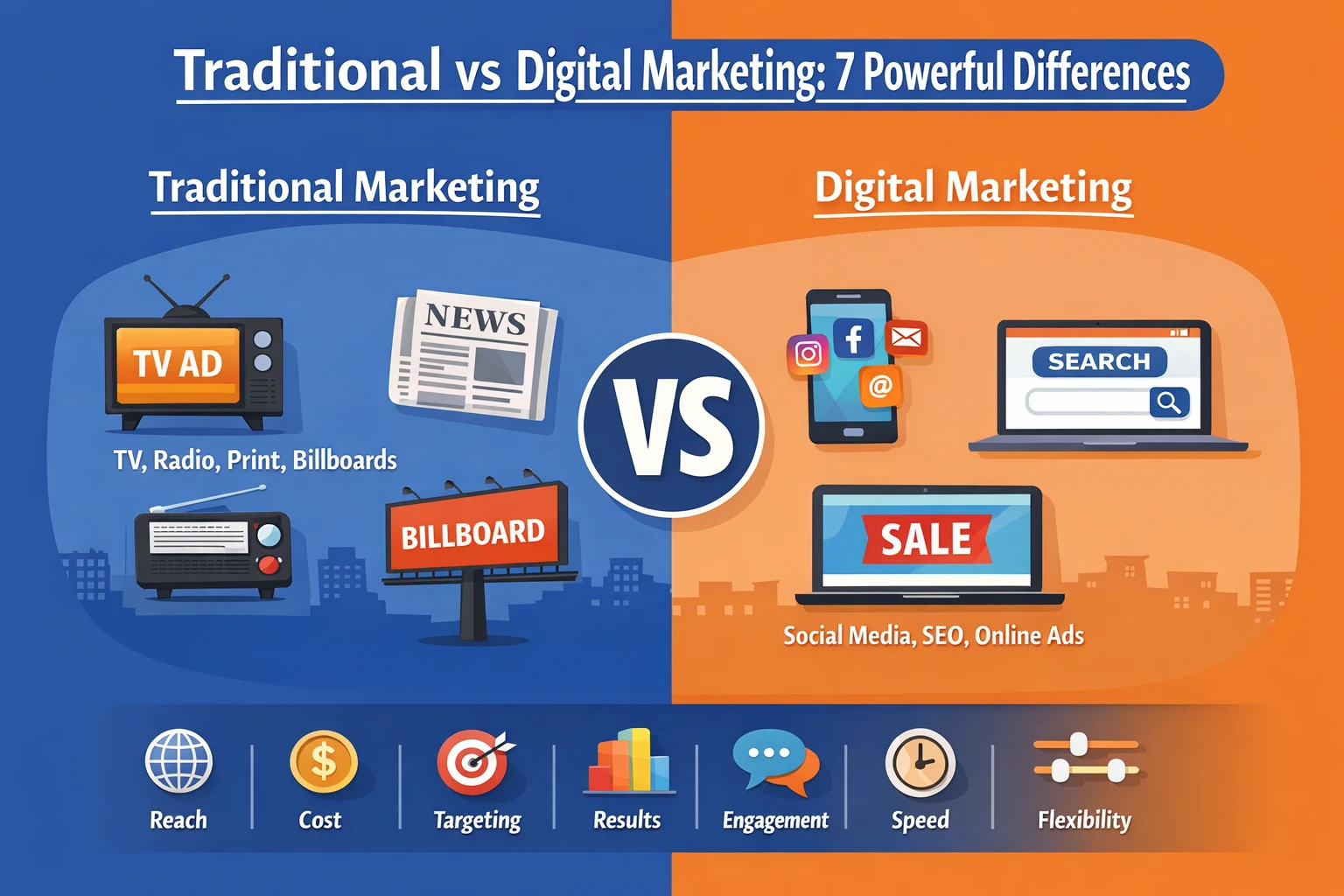
Traditional vs Digital Marketing: 7 Powerful Differences
Marketing plays a vital role in the success of any business. Companies promote products, communicate with customers, and build brand awareness through different marketing strategies. However, marketing methods evolve significantly as technology changes. Because of this evolution, businesses often compare traditional vs digital marketing to understand which approach works better for modern markets.
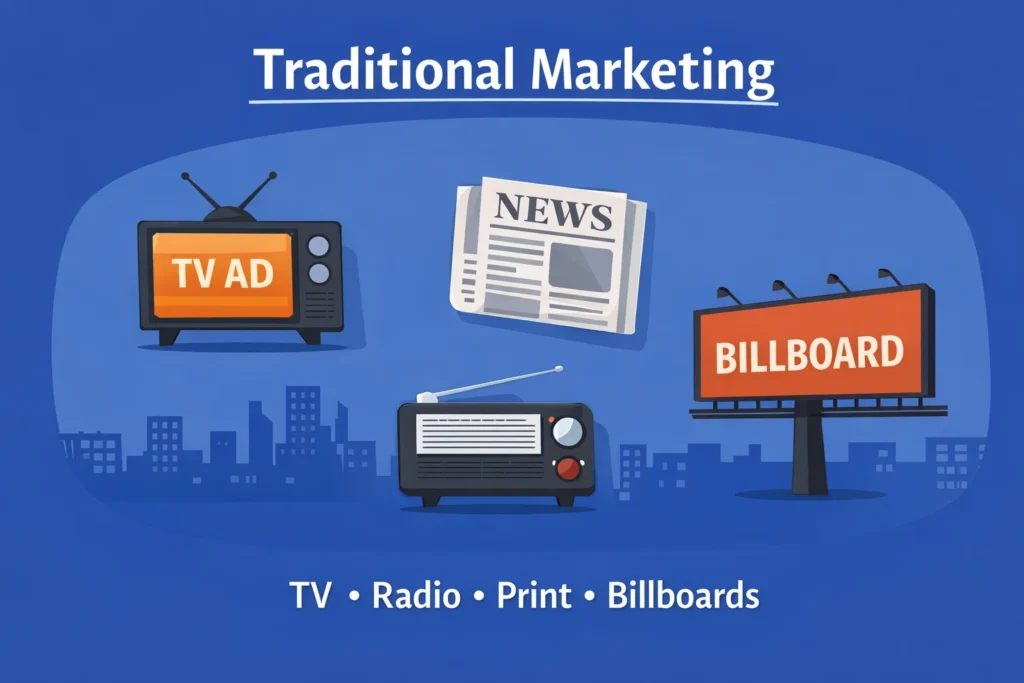
Traditional marketing includes offline promotional techniques such as television commercials, radio advertisements, newspaper ads, billboards, brochures, and direct mail campaigns. These marketing channels help companies reach large audiences and create strong brand recognition. For decades, businesses rely heavily on these methods to promote products and services.
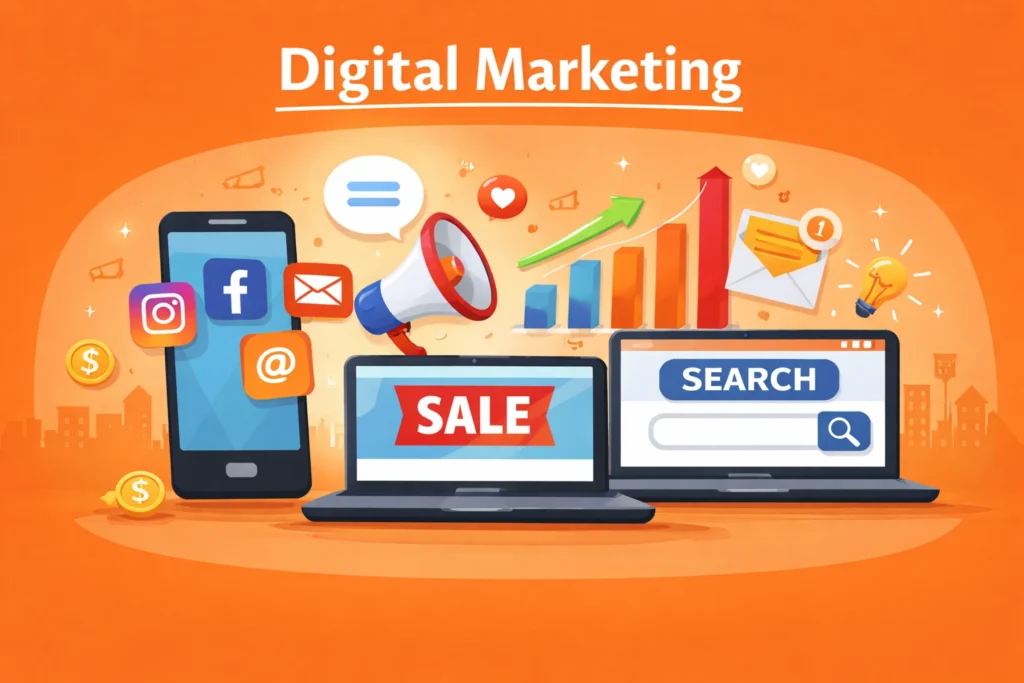
On the other hand, digital marketing focuses on online platforms. Businesses use websites, search engines, social media platforms, email campaigns, and online advertising to connect with customers. Because internet usage increases worldwide, digital marketing becomes an essential strategy for companies that want to reach modern consumers.
Therefore, understanding the differences between traditional vs digital marketing helps businesses choose effective marketing strategies that align with their goals, audience, and budget.
What Is Traditional Marketing?
Traditional marketing refers to promotional methods that use offline communication channels. Businesses rely on physical and broadcast media to deliver marketing messages to their audience.
Common Traditional Marketing Channels
Traditional marketing uses several channels to promote products and services.
Television Advertising
Television commercials allow businesses to present visual advertisements to large audiences. Companies often display commercials during popular programs to increase brand visibility.
Print Advertising
Print advertisements appear in newspapers, magazines, brochures, and flyers. Businesses distribute printed materials to attract local audiences.
Radio Advertising
Radio advertisements help companies promote products through audio messages broadcast to listeners.
Outdoor Advertising
Outdoor advertising includes billboards, posters, banners, and transit advertisements placed in high-traffic areas.
These marketing methods often help businesses create brand awareness and reach audiences who rely on traditional media.
What Is Digital Marketing?
Digital marketing refers to promoting products and services through internet-based platforms. Businesses connect with customers online using websites, social media platforms, search engines, and digital advertisements.
Popular Digital Marketing Channels
Several digital marketing strategies help businesses grow their online presence.
Search Engine Optimization (SEO)
SEO improves website visibility on search engines such as Google. Businesses optimize website content so that it appears higher in search results.
Social Media Marketing
Social media marketing allows companies to promote products through platforms like Facebook, Instagram, LinkedIn, and Twitter.
Pay-Per-Click Advertising (PPC)
PPC advertising enables businesses to display ads on search engines or social platforms. Advertisers pay only when users click on their advertisements.
Content Marketing
Content marketing focuses on creating valuable content such as blogs, videos, and infographics that attract and educate audiences.
Email Marketing
Email marketing helps businesses communicate directly with customers by sharing offers, updates, and newsletters.
Because digital marketing relies on online platforms, businesses can easily track campaign performance and optimize their strategies.
Traditional vs Digital Marketing: Key Differences
Understanding the differences between traditional vs digital marketing helps businesses select the most suitable promotional strategy.
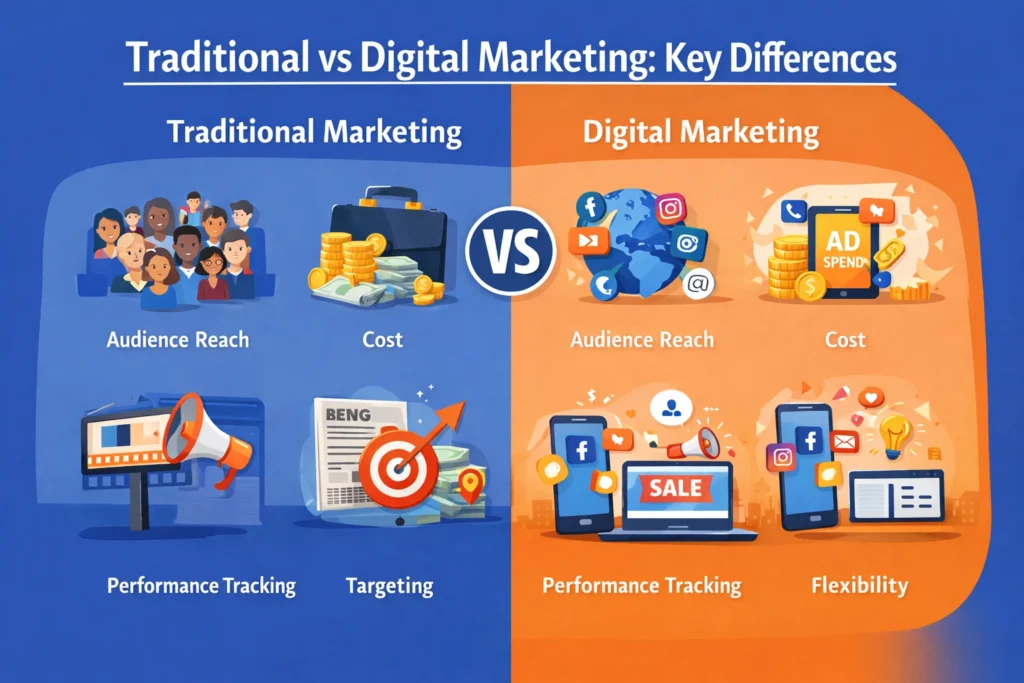
1. Audience Reach
Traditional marketing reaches audiences through television, newspapers, and outdoor advertisements. Although these platforms reach large audiences, they often target broad groups without specific segmentation.
Digital marketing, however, allows businesses to reach global audiences through the internet. Companies promote products to people in different locations simultaneously.
Therefore, digital marketing provides wider and more flexible audience reach.
2. Cost of Marketing Campaigns
Traditional marketing campaigns often require significant investment. Television advertisements, print media placements, and billboard advertisements involve high production and distribution costs.
In contrast, digital marketing offers cost-effective promotional opportunities. Businesses launch online campaigns with flexible budgets and scale them gradually.
Because of lower costs, digital marketing becomes accessible even for startups and small businesses.
3. Target Audience Precision
Traditional marketing targets audiences based on general demographics or geographic locations. For example, newspaper advertisements target readers within a particular city or region.
Digital marketing provides advanced audience targeting. Businesses choose audiences based on age, interests, online behavior, location, and purchasing preferences.
As a result, digital marketing ensures advertisements reach the most relevant customers.
4. Measurable Results
Another major difference between traditional vs digital marketing lies in performance measurement.
Traditional marketing campaigns often provide limited data. Businesses find it difficult to measure how many people respond to a billboard or newspaper advertisement.
Digital marketing, however, provides detailed analytics. Marketers track metrics such as website visits, clicks, engagement rates, and conversions.
Consequently, businesses analyze performance easily and improve campaigns continuously.
5. Customer Engagement
Traditional marketing mainly delivers one-way communication. Customers receive marketing messages through advertisements but rarely interact directly with brands.
Digital marketing encourages interactive communication. Customers comment on social media posts, share content, and communicate directly with companies through messages or reviews.
This interaction builds stronger relationships between businesses and their audiences.
6. Campaign Speed
Traditional marketing campaigns require more preparation time. Designing advertisements, printing materials, and scheduling broadcast commercials often take several days or weeks.
Digital marketing campaigns launch much faster. Businesses create advertisements, publish content, and start campaigns within minutes.
Therefore, digital marketing allows companies to respond quickly to market trends.
7. Flexibility and Optimization
Traditional marketing campaigns remain fixed after launch. Making changes to printed advertisements or television commercials often requires additional cost.
Digital marketing campaigns remain highly flexible. Marketers modify advertisements, keywords, and targeting options in real time.
Because of this flexibility, businesses optimize campaigns continuously for better results.
Advantages of Digital Marketing
Digital marketing offers several benefits that help businesses grow efficiently.
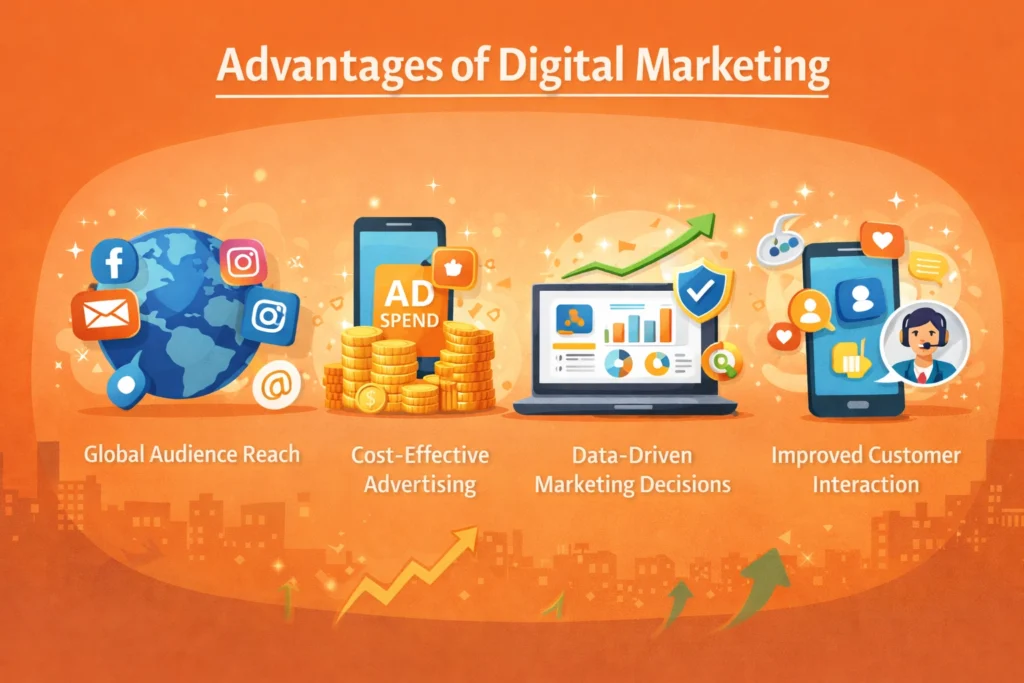
Global Audience Reach
Online platforms allow businesses to reach customers worldwide. Therefore, companies expand their markets beyond geographic boundaries.
Cost-Effective Advertising
Digital marketing campaigns require lower budgets compared to traditional advertising methods.
Data-Driven Marketing Decisions
Businesses analyze campaign performance using real-time analytics and optimize strategies accordingly.
Improved Customer Interaction
Social media platforms allow brands to communicate directly with customers and build lasting relationships.
Because of these advantages, digital marketing becomes the preferred strategy for many modern businesses.
Advantages of Traditional Marketing
Although digital marketing dominates the modern marketing landscape, traditional marketing still offers valuable benefits.
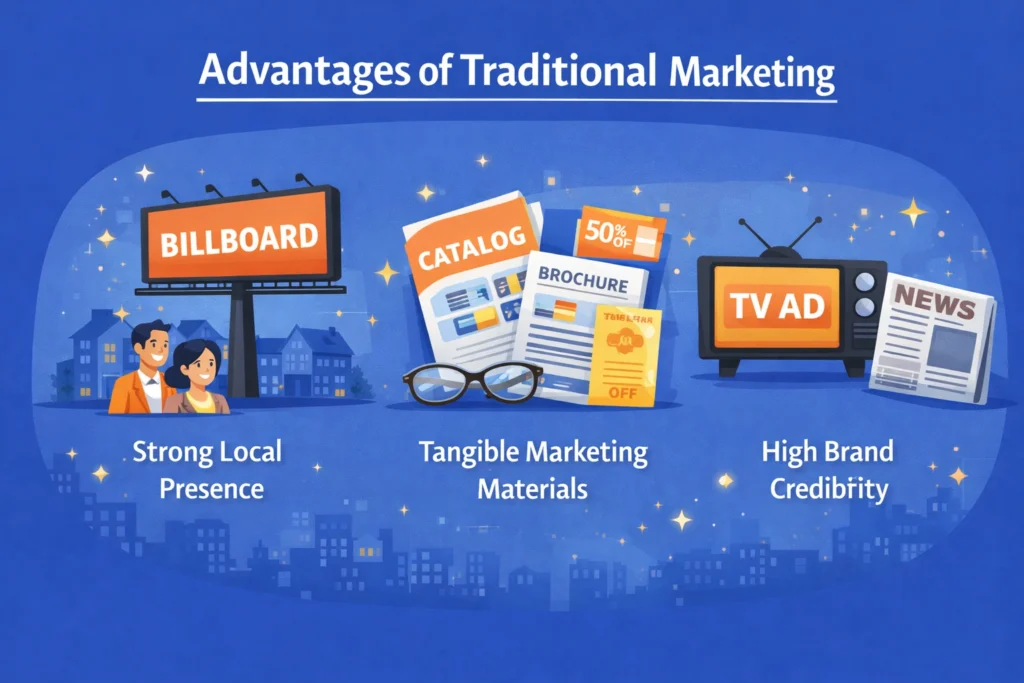
Strong Local Presence
Traditional marketing methods such as billboards and local newspapers effectively reach nearby audiences.
Tangible Marketing Materials
Printed brochures, catalogs, and flyers provide physical promotional materials that customers can review later.
High Brand Credibility
Many consumers still trust advertisements from established media channels such as television and newspapers.
Therefore, traditional marketing continues to play an important role in many industries.
Real-World Marketing Examples
Understanding traditional vs digital marketing becomes easier when examining real-world business scenarios.
For example, a local retail store often advertises products through printed flyers and newspaper advertisements. These traditional marketing strategies attract customers living nearby.
However, the same business also benefits from digital marketing. By creating a website and social media profiles, the store promotes products online and reaches a wider audience.
Similarly, e-commerce companies rely heavily on digital marketing strategies. They use SEO, Google Ads, content marketing, and social media campaigns to attract online shoppers.
Therefore, many businesses combine both traditional and digital marketing strategies to maximize their reach and improve overall marketing performance.
Future of Marketing Strategies
Marketing continues to evolve rapidly as technology advances. Consumers spend increasing amounts of time online, which encourages businesses to invest more in digital marketing strategies.
Artificial intelligence, data analytics, and marketing automation tools allow businesses to deliver personalized marketing experiences.
Although traditional marketing still plays an important role in brand awareness, digital marketing increasingly becomes the primary marketing channel for modern businesses.
Therefore, companies that adapt their strategies to digital platforms often achieve stronger growth and customer engagement.
Conclusion
Understanding the differences between traditional vs digital marketing helps businesses choose the right strategy for their goals. Traditional marketing uses offline channels such as television, radio, newspapers, and billboards to reach audiences. Digital marketing, however, uses online platforms such as search engines, websites, and social media to connect with customers.
Both marketing approaches offer unique advantages. Traditional marketing helps businesses build local brand recognition, while digital marketing provides targeted advertising, measurable results, and cost-effective promotional opportunities.
Therefore, many successful companies combine both strategies to achieve balanced marketing results. As technology continues to evolve, businesses that adapt their marketing strategies to modern digital platforms will remain competitive and continue to grow.