Performance Marketing: The Complete Guide to Measurable Digital Growth
Digital marketing is evolving rapidly. However, businesses today demand measurable results from their marketing investments. Instead of spending money on campaigns that only increase visibility, companies prefer strategies that generate real outcomes such as clicks, leads, and sales. Therefore, performance marketing becomes one of the most effective digital marketing strategies for modern businesses.
Moreover, brands want transparency and accountability when they invest in marketing. Traditional advertising often focuses on impressions and exposure, but it does not always guarantee measurable results. In contrast, ROI- Driven marketing allows businesses to track every action and pay only for successful outcomes. As a result, organizations gain better control over their marketing budgets and campaign performance.
In this guide, we explain what performance marketing is, how it works, the main channels involved, and why businesses increasingly rely on it to achieve digital growth.
What Is Performance Marketing?
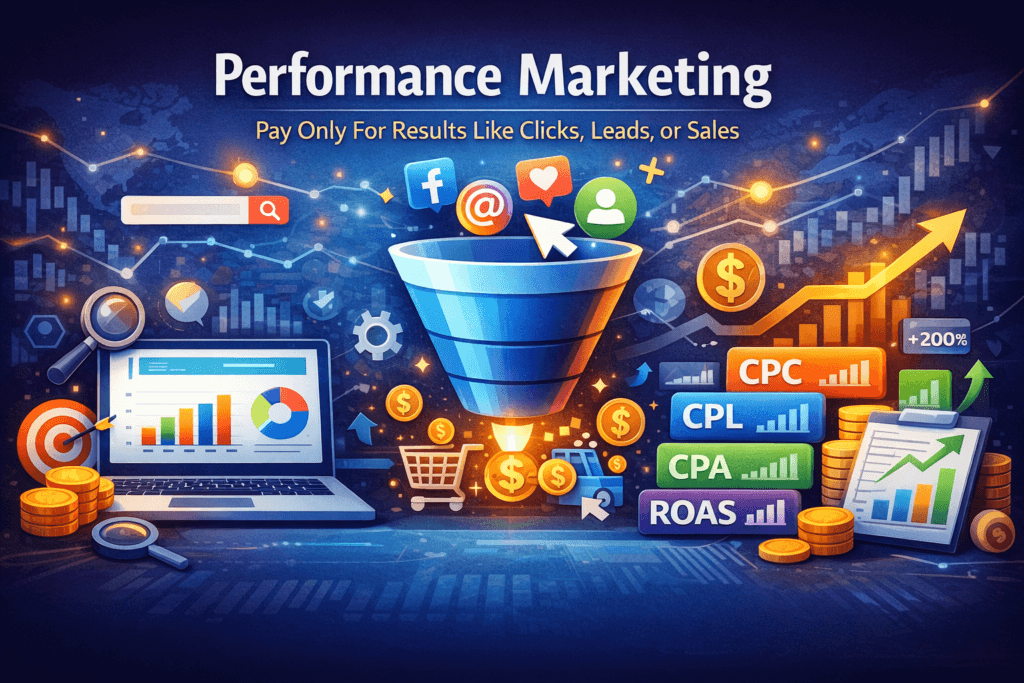
Performance marketing is a digital marketing strategy in which advertisers pay only when a specific action occurs. These actions may include clicks, leads, app installs, or completed purchases. Therefore, businesses pay for measurable performance rather than simply paying for ad visibility.
Unlike traditional advertising methods, result driven marketing focuses on results. Marketers monitor user interactions and track the effectiveness of every campaign. Consequently, companies clearly understand which marketing efforts generate conversions and which strategies require improvement.
Furthermore, direct response marketing uses several key metrics to evaluate success. These metrics include cost per click, cost per lead, cost per acquisition, and return on ad spend. Because of these measurable indicators, businesses can optimize campaigns and improve overall marketing performance.
How Performance Marketing Works
Understanding how pay-for-performance marketing works helps businesses implement effective campaigns. The process usually involves several stages that connect advertisers, marketing platforms, and target audiences.
First, marketers define campaign goals such as generating leads, increasing website traffic, or driving product sales. After that, they select appropriate advertising channels and design campaign creatives.
Next, the advertisements are displayed to targeted audiences through digital platforms. These platforms may include search engines, social media networks, or affiliate websites.
When users interact with advertisements, tracking systems record their actions. For example, when a user clicks an ad or completes a purchase, the system captures this information.
Finally, advertisers pay marketing partners only after the desired action occurs. Therefore, performance marketing ensures businesses invest in campaigns that deliver measurable results.
Key Channels Used in Performance Marketing
Successful performance marketing campaigns rely on multiple digital channels. Each channel plays a unique role in reaching audiences and generating conversions.

Search Engine Advertising
Search engines are one of the most powerful platforms for performance marketing. Businesses run paid advertisements that appear when users search for relevant keywords.
For example, when someone searches for “digital marketing services,” paid advertisements may appear at the top of search results. Advertisers pay only when users click these ads.
Because search engine advertising targets users who already show interest in specific products or services, it often generates high-quality leads.
Social Media Advertising
Social media platforms are also important channels for performance marketing. Platforms such as Facebook, Instagram, LinkedIn, and TikTok allow businesses to reach highly targeted audiences.
Marketers can segment audiences based on interests, demographics, location, and behavior. As a result, advertisements reach users who are more likely to engage with the content.
Furthermore, social media platforms provide detailed analytics that help marketers evaluate campaign performance. Therefore, marketers continuously optimize campaigns to improve results.
Affiliate Marketing
Affiliate marketing is another key component of performance marketing. In this model, businesses collaborate with affiliates who promote products or services through blogs, websites, or social media platforms.
Affiliates receive commissions only when their promotions generate successful outcomes such as sales or leads. Consequently, affiliate marketing becomes a low-risk strategy for businesses.
Additionally, affiliates often introduce products to new audiences. This expanded reach helps businesses grow their customer base.
Native Advertising
Native advertising integrates promotional content within the format of a website or digital publication. Unlike traditional banner ads, native advertisements blend naturally with surrounding content.
Because native advertisements feel less intrusive, users are more likely to engage with them. As a result, native advertising becomes a valuable channel in outcome- based marketing campaigns.
Performance Marketing vs Traditional Marketing
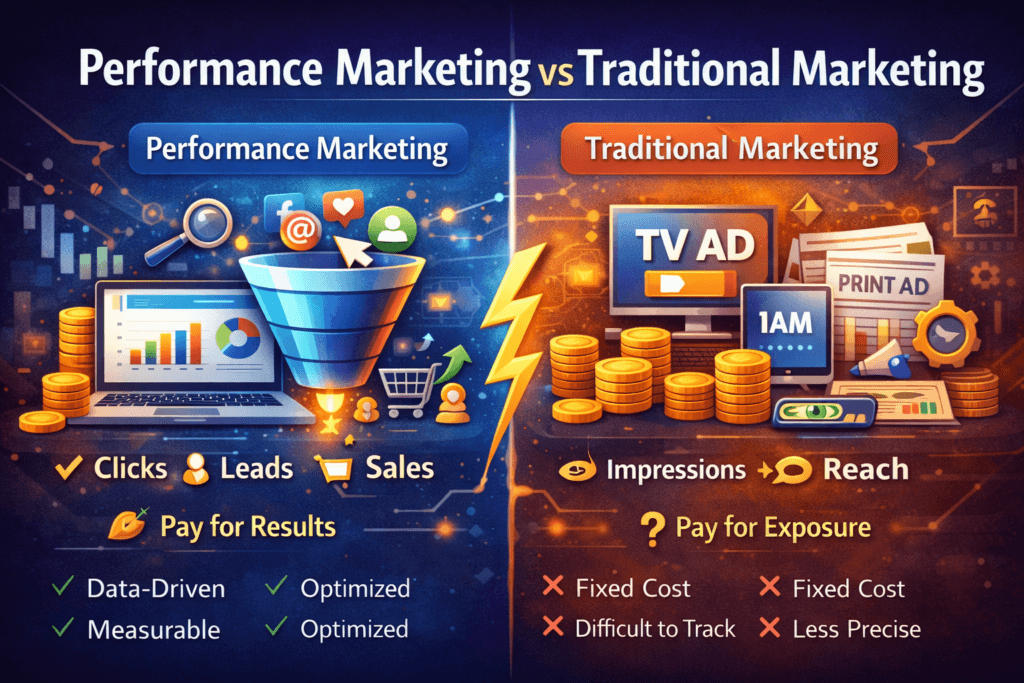
Traditional marketing methods focus primarily on brand awareness. Television advertisements, print ads, and billboards help businesses reach large audiences, but they often lack measurable results.
However, conversion marketing focuses on direct actions and measurable outcomes. Marketers analyze campaign data to understand which advertisements generate conversions.
Additionally, digital platforms provide real-time performance insights. Therefore, marketers can adjust campaigns quickly to improve results.
Consequently, performance marketing offers greater flexibility, transparency, and return on investment compared to traditional marketing approaches.
Key Metrics in Performance Marketing
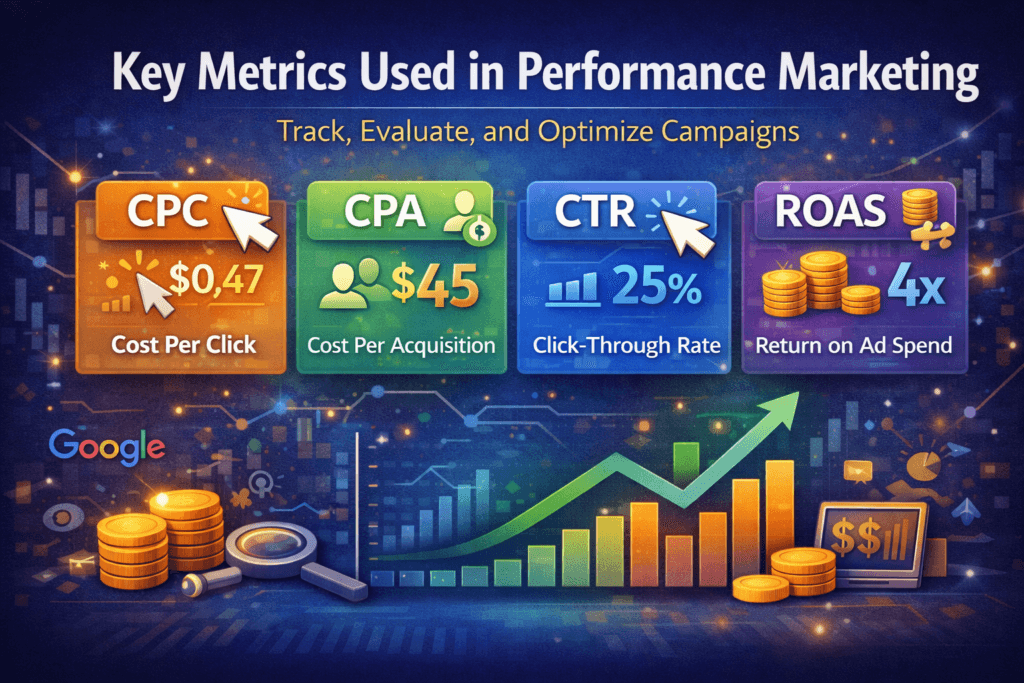
Data analysis is essential in performance marketing. Marketers rely on several metrics to measure campaign success and optimize performance.
| Metric | Description |
|---|---|
| Cost Per Click (CPC) | The amount paid when a user clicks an advertisement |
| Cost Per Acquisition (CPA) | The cost required to acquire a new customer |
| Click-Through Rate (CTR) | Percentage of users who click an ad after seeing it |
| Return on Ad Spend (ROAS) | Revenue generated compared to advertising cost |
By analyzing these metrics, marketers can improve campaign effectiveness and increase profitability.
Best Performance Marketing Strategies
Successful performance marketing campaigns require strategic planning and continuous optimization.

Audience Targeting
First, marketers analyze audience behavior and preferences. By understanding customer interests and demographics, businesses deliver more relevant advertisements.
Conversion-Optimized Landing Pages
Additionally, landing pages play a crucial role in converting visitors into customers. High-performing landing pages include clear messaging, strong calls-to-action, and fast loading speeds.
Campaign Optimization
Marketers continuously analyze campaign data and adjust targeting settings, advertisement creatives, and bidding strategies. Consequently, campaigns become more efficient over time.
Retargeting Campaigns
Retargeting is another effective performance marketing tactic. It allows businesses to reconnect with users who previously visited their website but did not complete a purchase.
By displaying relevant advertisements to these users, businesses increase the likelihood of conversions.
The Role of Content in Conversion Marketing
Content marketing supports conversion marketing strategies by attracting and educating potential customers.
For example, informative blog articles help businesses improve search engine visibility. Educational content also builds trust and encourages users to engage with marketing campaigns.
Moreover, content marketing strengthens the customer journey. Users first discover helpful information, then interact with advertisements, and eventually become customers.
Therefore, combining content marketing with performance marketing creates a powerful digital growth strategy.
Therefore, web development plays a vital role in successful performance marketing strategies.
A high-converting website should include:
- Fast page loading speed
- Mobile-friendly design
- Clear navigation structure
- Strong call-to-action buttons
- Optimized landing pages
Without these elements, marketing campaigns may generate traffic but fail to produce conversions.
Consequently, businesses often combine web development services with conversion marketing strategies to maximize results.
How Digital Marketing Agencies Use Conversional Marketing
Digital marketing agencies help businesses implement data-driven conversional marketing strategies.
Typically, agencies follow a structured process:
- Conduct market research and competitor analysis
- Identify target audiences
- Create digital advertising campaigns
- Optimize landing pages and website content
- Monitor campaign performance using analytics tools
- Continuously improve strategies based on data insights
Through this approach, agencies ensure marketing investments generate measurable growth.
The Future of Performance Marketing
The future of performance marketing continues to evolve with advancements in technology and data analytics.
Artificial intelligence is increasingly used to automate campaign optimization and improve targeting accuracy. Additionally, advanced analytics tools provide deeper insights into customer behavior.
Furthermore, personalized advertising experiences are becoming more common. Businesses create customized marketing messages that resonate with specific audiences.
As digital platforms continue to expand, performance marketing will remain a critical strategy for businesses seeking measurable growth.
Performance Marketing Examples from Real Businesses
Understanding real-world examples helps businesses see how Outcome – based marketing works in practice. Many companies across industries use this strategy to achieve measurable growth and improve marketing efficiency.
For example, e-commerce companies often run search advertising campaigns targeting customers who actively search for products online. When users search for specific items, businesses display relevant advertisements at the top of search results. If a user clicks the advertisement and completes a purchase, the company pays for that successful conversion. Therefore, marketing budgets are spent only on campaigns that generate revenue.
Similarly, mobile application companies rely heavily on performance marketing to increase app downloads. In this strategy, marketers promote the app through social media advertisements, influencer collaborations, and affiliate networks. Businesses pay advertising partners only when users install the application. As a result, companies can track user acquisition costs and optimize campaigns to attract high-quality users.
Another example appears in affiliate marketing programs. Many bloggers, influencers, and content creators promote products through their websites or social media platforms. These affiliates receive a commission whenever their promotional links generate sales. Consequently, businesses expand their market reach without paying for advertisements that fail to produce results.
Subscription-based services also benefit from performance marketing strategies. Streaming platforms, online education providers, and software companies frequently run paid campaigns to attract new subscribers. Marketers analyze campaign data to determine which advertisements produce the highest number of sign-ups. Based on this information, they optimize marketing strategies to maximize customer acquisition.
These examples demonstrate how performance marketing allows businesses to focus on results instead of simply increasing advertising exposure.
Challenges Businesses Face in Performance Marketing
Although conversion marketing offers many advantages, businesses also face certain challenges when managing campaigns. However, understanding these challenges helps marketers develop more effective strategies.
First, competition in digital advertising continues to increase. Many companies target similar audiences and keywords, which can increase advertising costs. Therefore, marketers must constantly optimize campaigns to maintain profitability and achieve better return on investment.
Another challenge involves accurate data tracking. Successful performance marketing campaigns rely on detailed analytics and conversion tracking tools. However, changes in privacy regulations and browser tracking policies sometimes make data collection more complex. As a result, marketers must adopt advanced tracking technologies to maintain campaign accuracy.
Additionally, creating engaging advertisement creatives is essential. Even if a campaign targets the right audience, poor advertisement design may reduce click-through rates. Therefore, marketers need to test multiple advertisement variations to identify which messages resonate best with their audience.
Despite these challenges, businesses that rely on data-driven strategies and continuous optimization can achieve strong results with Result- driven marketing.
Tools Used for Conversion Marketing Campaigns
Modern marketers use various digital tools to manage and optimize ROI driven marketing campaigns effectively. These tools provide valuable insights into campaign performance and help businesses improve marketing efficiency.
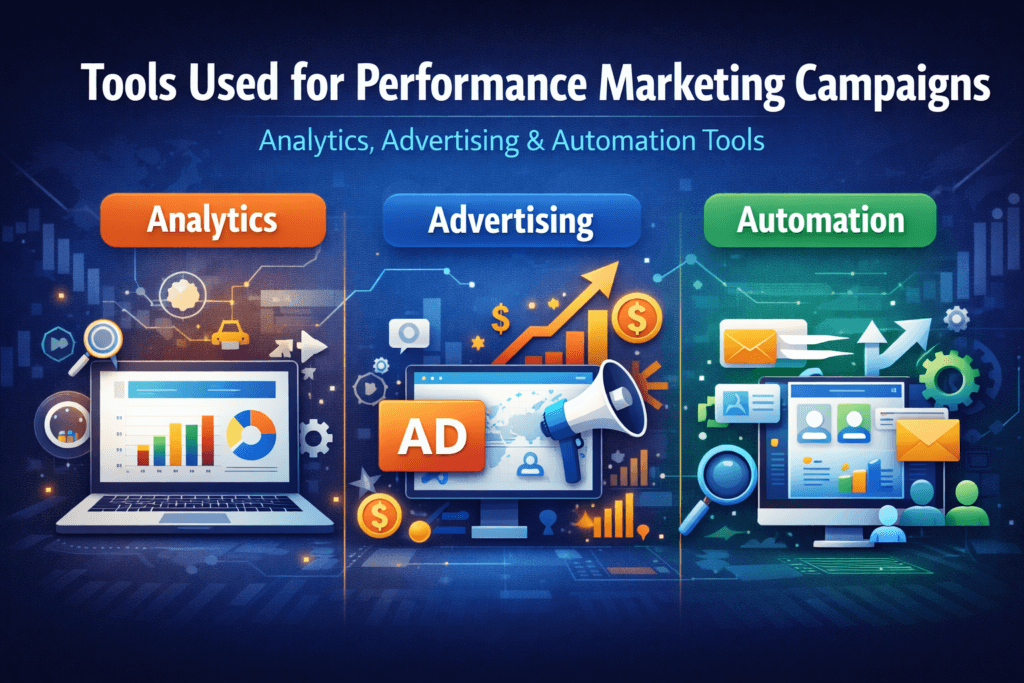
Analytics platforms play a critical role in performance marketing. These tools track website traffic, user behavior, and conversion data. Marketers analyze this information to understand how users interact with advertisements and landing pages.
Advertising platforms also provide built-in performance tracking features. Marketers can monitor key metrics such as impressions, clicks, conversions, and return on investment directly from these dashboards. This information allows businesses to adjust campaigns quickly when necessary.
Marketing automation tools also help streamline campaign management. These platforms allow businesses to automate tasks such as email marketing, audience segmentation, and lead nurturing. Consequently, marketing teams can focus more on strategy and optimization.
By using advanced analytics and automation tools, businesses improve campaign performance and achieve better results from their conversion marketing strategies.
Conclusion
In today’s competitive digital landscape, businesses require marketing strategies that deliver measurable results. Performance marketing provides a powerful solution by connecting marketing investment directly to customer actions such as clicks, leads, and purchases.
Moreover, this strategy enables businesses to analyze campaign performance, optimize marketing efforts, and maximize return on investment.
By combining outcome – based marketing with web development, content marketing, and data analytics, businesses can build highly effective marketing campaigns that drive long-term growth.
Therefore, companies that adopt performance marketing strategies gain a significant advantage in the digital marketplace.